

May 16, 2026
How Much Does Bathtub Refinishing Cost?
What does bathtub refinishing cost? Real pricing factors, ranges, and how to save vs. replacement. Free quote, 850-204-9300.
Read more →
BathMasters Blog
Stained, chipped, dull, or rough to the touch? Here's how to tell if your bathtub is a candidate for refinishing.
By Mike Tiedman · May 16, 2026
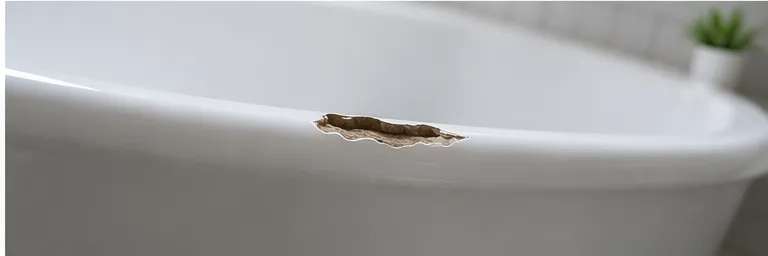
Most tubs don't suddenly fail. They wear down gradually (stains stick around longer, chips appear, the finish dulls) until one day you realize the bathroom looks aged even though everything else is fine. The question is when to do something about it. Here are the seven clearest signs that your tub is a candidate for refinishing, plus the cases where refinishing isn't the answer.
Hard water, rust from a dripping faucet, mineral buildup, or just years of accumulated soap residue can leave permanent-looking marks on a tub. If you've tried bathroom cleaners and the stains stay, the staining has worked its way into the surface itself, and no amount of additional cleaning will get them out.
Refinishing covers stains entirely with a new bonded coating. The surface looks like a fresh tub, with no trace of the previous staining.
Small chips in porcelain or enamel happen when something heavy lands wrong: a hair dryer, a child's toy, a falling shampoo bottle. Once exposed, the underlying iron or steel will rust over time, spreading the damage outward from the original chip.
Most chips are repairable. Cracks depend on the surface. See our bathtub chip and crack repair page for porcelain/enamel/acrylic, or our fiberglass crack repair guide for fiberglass tubs and showers.
A new tub feels smooth. A worn tub feels slightly rough to the touch, and that roughness traps soap residue and bacteria that won't come out no matter how often you clean. The surface has microscopic pitting and erosion, often from years of harsh cleaners or abrasive scrubbing.
Refinishing restores a smooth glossy surface that cleans easily and doesn't hold residue. For many homeowners this is the single most noticeable difference after a refinish. The tub actually feels new again, not just looks new.
If your bathroom still has a harvest gold, avocado green, beige, blue, or pink tub from a previous decade, refinishing solves it, and color change is included in a standard BathMasters refinish at no extra cost. Most refinishing companies can take a tub from any color to white, almond, biscuit, or other modern neutrals.
This is one of the highest-value reasons to refinish. A dated tub is often the single biggest visual problem in an otherwise fine bathroom. Refinishing it can drop the apparent age of the whole bathroom by 20-30 years.
Fiberglass tubs and showers develop hairline cracks over time, usually in the floor of the tub or shower where weight and flex create stress. Caught early, these are repairable. Caught late, after water has worked its way behind the surface, the repair area gets larger.
If you're seeing any hairline cracks in a fiberglass tub or shower, address them sooner rather than later. Our fiberglass crack repair guide covers the full process.
Original cast iron clawfoot tubs and vintage tubs are worth preserving. The cast iron itself often outlives the building it's in. What wears out is the porcelain coating on top. It stains, chips, and dulls just like a modern porcelain tub, but the cast iron underneath stays sound.
Refinishing is the right call for these tubs almost without exception. Replacing a vintage clawfoot with a modern reproduction loses the character that made the original valuable. See our clawfoot tub refinishing page for specifics on the process for vintage tubs.
If your tub was refinished years ago and the refinish itself has started to peel, lift, or yellow, it's time for another round. Previously refinished tubs can be professionally stripped and refinished again, restoring them to like-new condition. This is one of the most useful properties of refinishing. It's renewable.
Common signs the previous refinish is failing:
If you've got any of these, the underlying tub is almost certainly still fine. The refinish has just reached the end of its useful life and needs to be redone.
A few cases where refinishing won't help and replacement is the right call:
For the structural decision between refinishing and replacing, see our refinishing vs. replacement breakdown.
The most reliable way is photos. Send us pictures showing the whole tub plus close-ups of any specific damage, and we'll tell you honestly whether refinishing makes sense for your tub. After 26 years across the Gulf Coast, we've seen most of what shows up, and we'll give you a straight answer either way.
Send a few photos for a free same-day quote. 26 years of refinishing experience, 5-year warranty, no deposit required.
May 16, 2026
What does bathtub refinishing cost? Real pricing factors, ranges, and how to save vs. replacement. Free quote, 850-204-9300.
Read more →

May 16, 2026
How fiberglass tub and shower cracks are professionally repaired. DIY warnings, warning signs, and when to call a pro.
Read more →

May 16, 2026
Why hotels choose refinishing over replacement: cost per unit, turnaround time, off-hours scheduling. Volume pricing available.
Read more →